
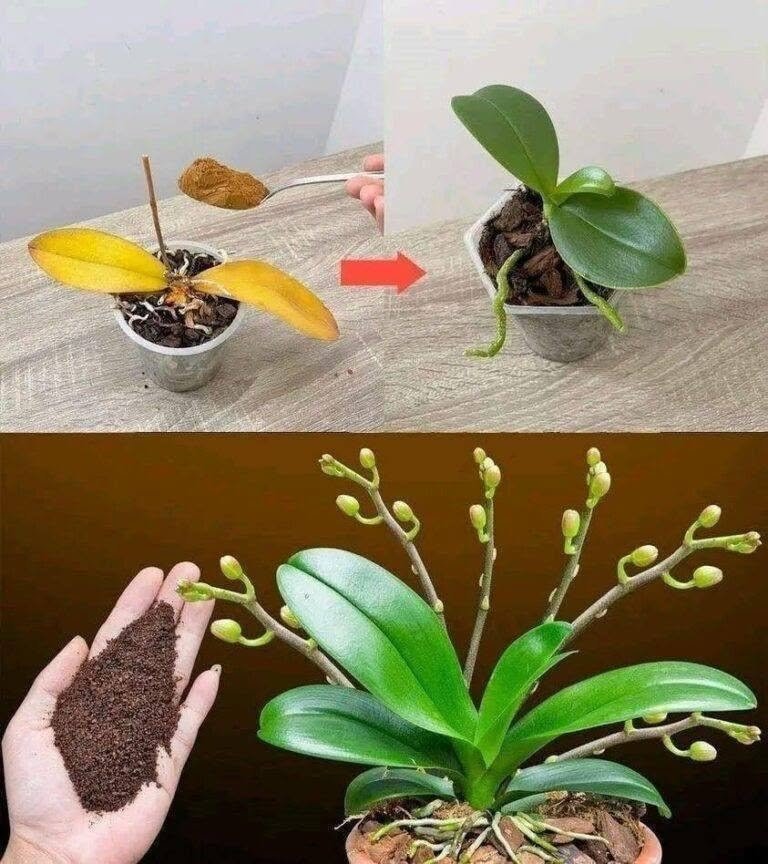
Orchids can seem surprisingly difficult to rebloom. When an orchid grows beautiful leaves but refuses to produce flowers, it’s tempting to look for a quick homemade fertilizer or a one-teaspoon “secret.”
But there is no single kitchen ingredient that can reliably make an orchid suddenly produce lots of flowers.
For most orchids, especially popular Phalaenopsis orchids, flowering depends much more on light, temperature, watering, roots, and appropriate nutrition than on a miracle additive.
If your orchid isn’t blooming, these simple adjustments are a better place to start.
1. Give the Orchid Enough Bright, Indirect Light
Light is one of the most important factors affecting flowering.
An orchid kept in a very dark location may continue producing leaves while failing to develop flower spikes.
A bright location with indirect or filtered light is often suitable for many common indoor orchids.
An east-facing window can work well in many homes. Strong direct midday sunlight, however, can scorch the leaves.
A useful clue
Healthy leaves that are medium green and firm generally indicate reasonable light conditions.
Very dark green leaves can sometimes indicate insufficient light, while yellowing or scorched areas may indicate excessive light or another problem.
2. Don’t Overwater
One of the most common mistakes orchid owners make is watering too frequently.
Orchid roots need both moisture and access to air. Keeping the potting medium constantly saturated can damage roots and contribute to rot.
Instead of watering according to a rigid schedule, check the plant and its growing medium.
For many Phalaenopsis orchids, the roots can provide a useful clue:
- Green roots are generally hydrated.
- Silvery or grayish roots often indicate that watering may be needed.
- Brown, mushy, or deteriorating roots can indicate a problem.
The exact watering needs depend on the orchid species, potting medium, temperature, humidity, and container.
3. Use the Right Fertilizer
Orchids need nutrients, but more fertilizer does not necessarily mean more flowers.
A fertilizer formulated for orchids can be used according to the product’s directions.
Avoid concentrating homemade fertilizer solutions or repeatedly adding kitchen ingredients to the pot. Excess salts can accumulate in the growing medium and damage the roots.
If you want to fertilize, follow the manufacturer’s recommended dilution and frequency rather than assuming a teaspoon of any household ingredient is beneficial.
4. Temperature Can Influence Flowering
For some Phalaenopsis orchids, a modest difference between daytime and nighttime temperatures can help encourage flowering.
If your orchid has healthy leaves and roots but hasn’t produced a flower spike for a long time, naturally cooler nighttime conditions may sometimes help trigger flowering.
Avoid exposing the plant to extreme temperature changes or cold drafts.
5. Don’t Cut Healthy Roots
Healthy orchid roots are important for water and nutrient uptake.
If you see aerial roots growing outside the pot, don’t automatically cut them off. They are often completely normal.
Remove roots only when they are clearly dead or damaged, and use clean tools when pruning.
6. Check the Pot and Growing Medium
Orchids are commonly grown in specialized, airy media such as bark rather than ordinary garden soil.
If the potting material has broken down and remains wet for long periods, the roots may struggle to get enough air.
Signs that your orchid may need attention include:
- Persistent soggy growing medium
- A sour or unpleasant smell
- Mushy roots
- Poor drainage
- A plant that repeatedly loses leaves
Repotting may be appropriate when the growing medium has deteriorated or the roots are unhealthy.
What About the “One Teaspoon” Tricks?
Online gardening posts sometimes recommend adding a teaspoon of:
- Sugar
- Rice water
- Coffee
- Cinnamon mixtures
- Baking soda
- Milk
- Various kitchen fertilizers
These methods are often presented as secret orchid-flowering formulas.
The problem is that a plant’s nutritional needs are more complicated than adding a random household ingredient.
Some substances may provide nutrients in certain circumstances, but the concentration, pH, salts, and microbial effects matter. A homemade mixture can easily do more harm than good if it is too concentrated.
Cinnamon, for example, is sometimes discussed as an orchid remedy, but it should not be treated as a fertilizer or a guaranteed flowering stimulant.
A Better “Recipe” for More Orchid Flowers
Instead of relying on a miracle teaspoon, think of flowering as a combination of conditions:
Bright indirect light + appropriate watering + healthy roots + suitable nutrition + appropriate temperatures = better conditions for flowering.
No single ingredient can compensate for a plant that is suffering from inadequate light, root damage, overwatering, or another underlying problem.
What If Your Orchid Still Won’t Bloom?
Be patient.
After flowering, orchids can spend considerable time growing leaves and roots before producing another flower spike.
If the plant has:
- Healthy leaves
- Healthy roots
- Adequate light
- Appropriate watering
- Suitable temperatures
then a period without flowers does not necessarily mean something is wrong.
Avoid repeatedly changing fertilizers or adding multiple home remedies in an attempt to force flowering.
Sometimes the best thing you can give an orchid is stable, appropriate care and time.
The Bottom Line
There is no scientifically established one-teaspoon miracle ingredient that will suddenly make every orchid produce lots of flowers.
If you want an orchid to rebloom, focus on the fundamentals: light, watering, drainage, healthy roots, appropriate fertilizer, and suitable temperatures.
A healthy orchid with the right growing conditions has a much better chance of flowering than one treated with a succession of untested kitchen remedies.
Gardening Disclaimer
Plant responses vary by orchid species, growing conditions, and plant health. This article provides general gardening information and does not guarantee flowering. Always follow the instructions on any commercial fertilizer or plant-care product you use.