
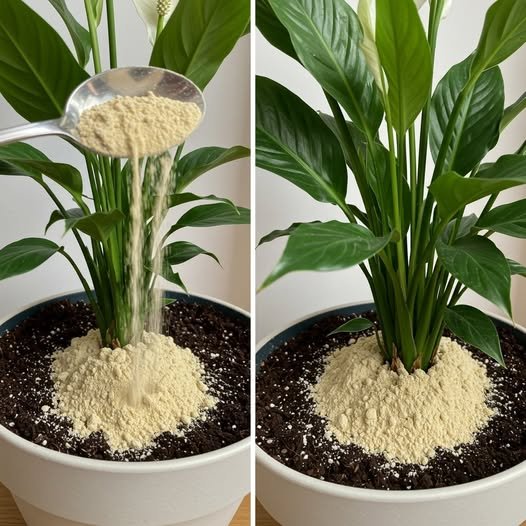
A peace lily can be one of the most rewarding houseplants to grow. With the right conditions, it can produce its distinctive white flowers repeatedly over many years.
But there is no secret ingredient that can guarantee a peace lily will bloom continuously for 10 years.
If your plant has healthy leaves but rarely produces flowers, the problem is often not a lack of a miracle fertilizer. Light, watering, nutrition, and root health all play important roles.
One simple ingredient that can be useful is a balanced houseplant fertilizer—used correctly and in moderation.
The “One Ingredient” to Consider: Balanced Fertilizer
Peace lilies need nutrients to produce healthy foliage and flowers.
A complete, balanced liquid houseplant fertilizer can provide nutrients such as nitrogen, phosphorus, and potassium, along with smaller amounts of other essential nutrients.
The important word is balanced.
Using more fertilizer does not mean getting more flowers. Excess fertilizer can build up in the soil and damage the plant’s roots.
Follow the dilution instructions on the product label rather than guessing the amount.
But Fertilizer Alone Won’t Make It Bloom
This is where many peace-lily care tips go wrong.
A plant can have plenty of fertilizer and still refuse to flower if it doesn’t receive enough suitable light.
Peace lilies generally do best in bright, indirect light. Very dark locations may keep the foliage alive but can reduce flowering.
Avoid placing the plant in harsh, direct midday sunlight, which can scorch its leaves.
How Often Should You Fertilize?
For a typical indoor peace lily, fertilizer is generally more useful during periods of active growth than during winter or other periods of slower growth.
Use a diluted, complete houseplant fertilizer according to the manufacturer’s instructions.
If the leaves develop brown tips or the soil develops a crusty buildup, excessive fertilizer or salt accumulation may be contributing.
When in doubt, less is usually better than repeatedly adding concentrated fertilizer.
Watering Matters Just as Much
Peace lilies like consistently moist soil, but they don’t want to sit in constantly saturated conditions.
A simple approach is to check the top layer of soil before watering.
If it feels somewhat dry, water thoroughly and allow excess water to drain away.
Never leave the pot sitting in a tray of stagnant water for long periods.
Both underwatering and overwatering can cause problems with leaves and roots—and a plant with stressed roots is unlikely to flower at its best.
The Pot and Roots Can Make a Difference
If your peace lily has been in the same container for years, the roots may eventually become crowded.
Signs of a root-related problem can include:
- Roots circling densely inside the pot
- Water running straight through the container
- Very slow growth
- Soil that dries unusually quickly
- A plant that repeatedly wilts despite adequate watering
If the plant is severely root-bound, repotting it into a slightly larger container with fresh, well-draining potting mix may help.
Avoid jumping to a dramatically larger pot because excessive soil can remain wet for too long.
Remove Old Flowers
Once a peace lily’s flowers have finished, they gradually turn green or brown.
Removing spent flower stalks can improve the plant’s appearance and allow it to focus its energy on new growth.
Use clean scissors and cut the spent stalk close to the base.
This doesn’t force flowering by itself, but it is a useful part of routine maintenance.
Can Household Ingredients Make a Peace Lily Bloom?
You may see recommendations for adding things such as:
- Sugar
- Coffee grounds
- Milk
- Rice water
- Banana peels
- Baking soda
These household remedies are often presented as secret flowering boosters, but they are not necessary for healthy peace-lily care.
Some can even create problems by encouraging mold, attracting insects, changing the soil environment, or adding nutrients in an unpredictable form.
A properly formulated houseplant fertilizer is a much more controlled option.
What About Epsom Salt?
Epsom salt is another popular gardening remedy.
It supplies magnesium and sulfur, but adding it routinely does not guarantee more flowers. If your plant isn’t deficient in magnesium, extra Epsom salt may provide little benefit and can contribute unnecessary salts to the growing medium.
It’s better to correct a confirmed nutrient problem than to add supplements simply because they are associated with flowering online.
Can a Peace Lily Really Bloom for 10 Years?
A healthy peace lily can live for many years indoors with appropriate care.
However, “blooming for 10 years in a row” is not a realistic guarantee.
Flowering naturally varies with the plant’s age, variety, growing conditions, season, light exposure, and overall health.
The goal should be a healthy plant that has the conditions it needs to flower repeatedly—not forcing it to bloom continuously.
A Simple Peace Lily Routine
For the best chance of repeated flowering:
- Give it bright, indirect light.
- Keep the soil moderately moist without keeping it waterlogged.
- Use a diluted, complete houseplant fertilizer during active growth.
- Make sure the container drains properly.
- Remove spent flower stalks.
- Repot when the roots become severely crowded.
- Watch for pests and signs of root problems.
The Bottom Line
There is no single ingredient that can guarantee a peace lily will bloom for 10 years.
If you want more flowers, focus first on bright indirect light, appropriate watering, healthy roots, and sensible fertilization. A balanced houseplant fertilizer can support growth when used correctly, but it cannot compensate for poor lighting or unhealthy roots.
In other words, the real secret isn’t a miracle ingredient—it’s consistent care.
Plant-Care Disclaimer
Plant responses vary according to species, variety, growing conditions, and individual plant health. Fertilizer should always be used according to the product label, and household remedies should not be assumed to be safe or effective simply because they are popular online.