
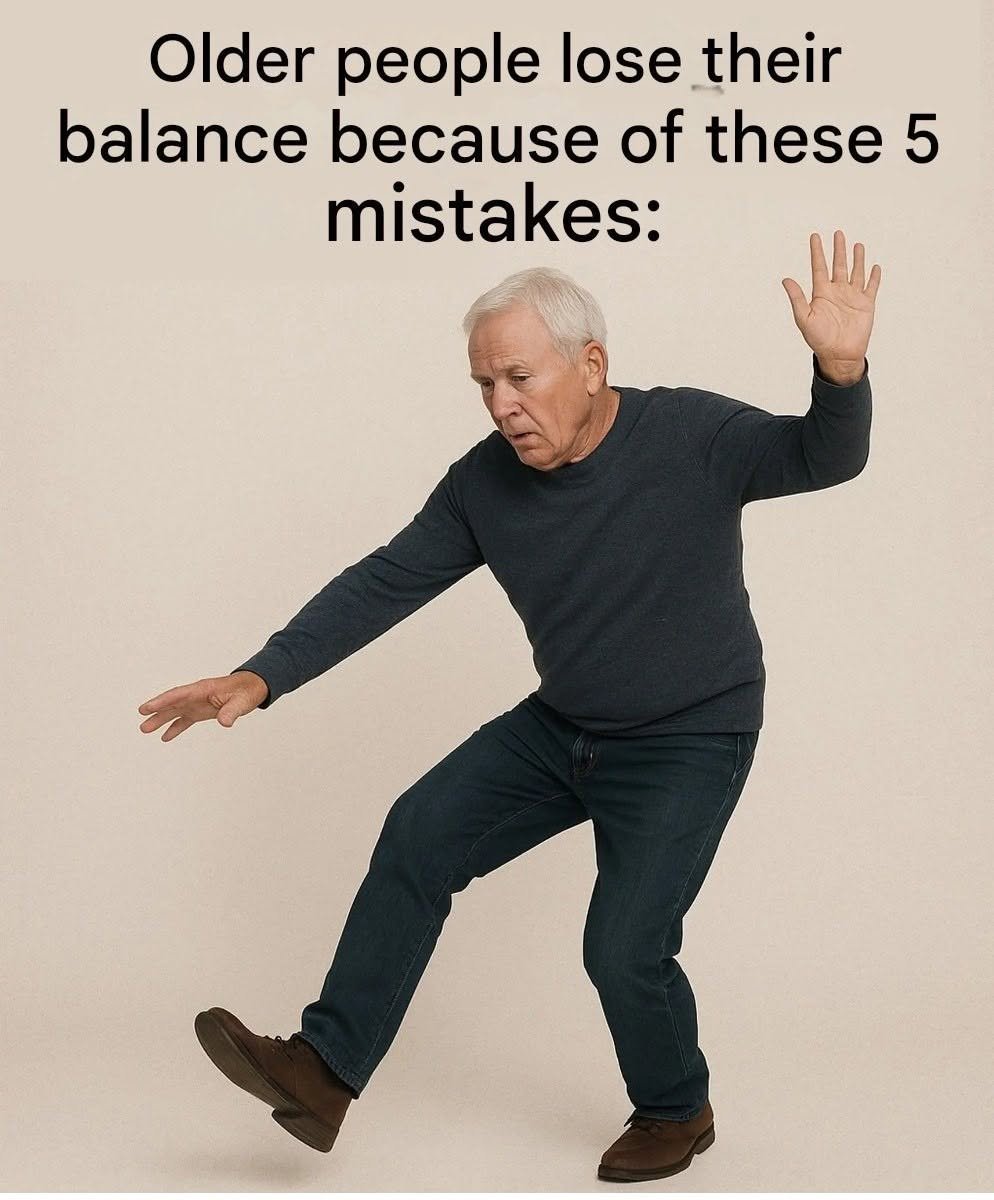
As we get older, changes in muscle strength, vision, hearing, coordination, and the body’s balance systems can make falls more likely.
But aging does not mean that losing your balance or falling is inevitable.
In many cases, everyday habits and environmental factors can increase the risk of losing balance. Recognizing these problems early can help older adults stay safer, more independent, and more confident when walking.
Here are five common mistakes and habits that may increase the risk of falls—and what you can do about them.
1. Getting Up Too Quickly
Standing up suddenly after sitting or lying down can sometimes cause a temporary drop in blood pressure, known as orthostatic hypotension.
This may lead to:
- Lightheadedness
- Blurred vision
- Weakness
- Unsteadiness
- Feeling as though you might faint
The risk can be greater in older adults and in people taking certain medications.
A safer approach
Take your time when changing positions.
Before standing, sit at the edge of the bed or chair for a moment. Move your feet, steady yourself, and then stand slowly.
If you frequently feel dizzy when standing, tell your healthcare professional. Your medications, hydration, blood pressure, or another medical condition may need to be evaluated.
2. Wearing Unsafe Footwear
Footwear can have a surprisingly important effect on stability.
Loose slippers, worn-out shoes, slippery soles, high heels, or shoes that do not fit properly can make walking less stable.
Shoes with poor support can also make it harder to maintain balance on uneven surfaces.
A safer approach
Choose shoes that:
- Fit securely
- Have a stable, supportive sole
- Provide good traction
- Do not easily slip off
- Are comfortable for walking
Avoid walking around the house in socks on slippery floors if you are at increased risk of falling.
3. Ignoring Vision Problems
Good vision plays an important role in balance.
Difficulty seeing steps, obstacles, uneven surfaces, or changes in flooring can make falls more likely.
Cataracts, glaucoma, changes in prescription, and other eye conditions can gradually affect vision without causing obvious symptoms at first.
A safer approach
Have your vision checked regularly and follow your eye-care professional’s recommendations.
Keep glasses clean and make sure you use the appropriate prescription for the activity.
At home, make sure hallways, stairways, bathrooms, and other frequently used areas are adequately lit.
4. Rushing or Trying to Do Too Much at Once
Moving too quickly can increase the risk of losing balance.
This can happen when someone rushes to answer the phone, get to the bathroom, climb stairs, or carry several objects at once.
Trying to multitask while walking can also make it harder to pay attention to obstacles.
A safer approach
Slow down when changing direction, stepping over obstacles, or using stairs.
Keep one hand free when possible, particularly on stairs.
If you need to carry something, make sure it does not block your view of the floor.
If you feel unsteady, use an appropriate handrail or mobility aid rather than trying to move quickly without support.
5. Neglecting Strength and Balance Exercises
Muscle weakness and reduced balance can develop gradually when physical activity decreases.
Weakness in the legs and core can make everyday movements—such as standing from a chair, climbing stairs, or stepping over an obstacle—more difficult.
The good news is that appropriate physical activity can help older adults maintain strength, balance, and physical function.
A safer approach
Ask a healthcare professional or physical therapist about exercises appropriate for your fitness level and medical conditions.
Depending on the individual, a program may include:
- Leg-strengthening exercises
- Balance exercises
- Walking
- Flexibility exercises
- Functional movements such as safely standing from a chair
People with significant balance problems should receive appropriate guidance before beginning new exercises.
Other Factors That Can Increase Fall Risk
The five habits above are only part of the picture.
Falls can also be associated with:
- Medication side effects
- Low blood pressure
- Muscle weakness
- Arthritis
- Neurological conditions
- Inner-ear or vestibular problems
- Poor lighting
- Clutter or loose rugs
- Alcohol use
- Dehydration
- Foot problems
Some medications can cause dizziness or drowsiness. If you have experienced a fall or frequently feel unsteady, ask your doctor or pharmacist to review your medications.
Never stop a prescribed medication on your own.
Make Your Home Safer
A safer home environment can significantly reduce hazards.
Consider:
- Removing loose rugs or securing them properly
- Keeping walkways clear
- Installing adequate lighting
- Using handrails on stairs
- Adding grab bars where appropriate in the bathroom
- Keeping frequently used items within easy reach
- Cleaning up spills immediately
- Using non-slip surfaces where appropriate
Small changes can make everyday movement considerably safer.
When Balance Problems Need Medical Attention
Occasional unsteadiness can happen to anyone, but new or worsening balance problems should not simply be dismissed as a normal part of aging.
Talk to a healthcare professional if you experience:
- Frequent falls
- Repeated near-falls
- New difficulty walking
- Persistent dizziness
- Unexplained weakness
- A significant change in coordination
- New numbness or tingling
- Difficulty getting up from a chair
- A sudden change in balance
A medical evaluation can help identify whether medications, vision problems, blood pressure, muscle weakness, neurological conditions, or another issue is contributing to the problem.
Sudden Loss of Balance Can Be an Emergency
A sudden loss of balance accompanied by symptoms such as facial drooping, weakness or numbness on one side of the body, difficulty speaking, severe dizziness, or a sudden severe headache may indicate a stroke.
Seek emergency medical attention immediately.
Do not wait for these symptoms to disappear.
The Bottom Line
Losing balance is not an inevitable part of getting older.
Simple changes—such as standing up slowly, wearing stable footwear, maintaining good vision, avoiding rushing, and staying physically active—can help reduce some common fall risks.
However, persistent or worsening balance problems deserve medical attention because they can sometimes be a sign of an underlying condition.
The goal is not to restrict an older person’s independence. It is to make everyday movement safer, stronger, and more confident.
Medical Disclaimer
This article is intended for general educational purposes and does not replace professional medical advice, diagnosis, or treatment. Older adults with recurrent falls, dizziness, weakness, or new balance problems should speak with a qualified healthcare professional. Sudden neurological symptoms require emergency medical attention.