
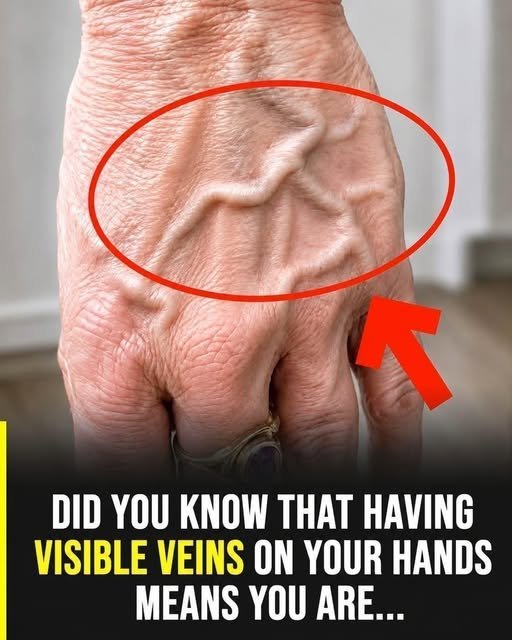
Have you ever noticed that the veins on your hands, arms, legs, or feet suddenly look more prominent?
Visible veins can be surprising, but they don’t automatically mean that something is wrong. In many healthy people, veins become easier to see because of genetics, low body fat, exercise, age, temperature, or simply the way the veins are positioned beneath the skin.
However, a new or unusual change in the appearance of a vein can sometimes deserve medical attention.
So what can visible veins actually tell you?
1. You May Simply Have Less Fat Under the Skin
People with lower amounts of subcutaneous body fat may naturally have more visible veins.
With less tissue between the skin and the veins, superficial blood vessels can be easier to see.
This is particularly common on the:
- Hands
- Forearms
- Shoulders
- Legs
- Feet
Visible veins in an otherwise healthy person are often simply a normal feature of their anatomy.
2. Exercise Can Make Veins More Prominent
Have you ever noticed your veins becoming more visible during or immediately after exercise?
That’s usually not surprising.
Physical activity increases blood flow to working muscles. Muscles can also temporarily become fuller during exercise, making superficial veins appear more prominent.
After you cool down and your circulation returns toward its resting state, the veins may become less noticeable.
3. Heat Can Make Veins Stand Out
Warm temperatures can cause blood vessels near the skin to widen as the body works to release heat.
As a result, veins may appear more noticeable during:
- Hot weather
- A warm shower
- Exercise
- Time spent in a heated environment
This temporary change is usually normal.
4. Aging Can Make Veins More Visible
As we age, the skin gradually becomes thinner and loses some of its elasticity and supporting tissue.
Changes in skin thickness and subcutaneous tissue can make veins more noticeable, particularly on the hands and arms.
Therefore, increasingly visible veins aren’t necessarily a sign of poor health or a dangerous circulation problem.
5. Genetics Matter
Some people simply inherit more prominent superficial veins.
Two people with similar body weight and fitness levels can have very different-looking veins.
If you’ve always had visible veins and they haven’t changed significantly, genetics and normal anatomy may be the simplest explanation.
What About Bulging Veins on the Legs?
Leg veins deserve a little more attention because some changes can be associated with varicose veins or chronic venous problems.
Varicose veins are enlarged, twisted veins that commonly appear on the legs.
They may be associated with:
- Aching or heaviness
- Leg discomfort
- Swelling
- Itching
- Skin changes around the affected area
They are often not dangerous, but persistent symptoms should be discussed with a healthcare professional.
Visible Veins Don’t Automatically Mean “Good Circulation”
You may see claims online that prominent veins prove that your blood is circulating exceptionally well.
That’s not necessarily true.
Visible veins are not a reliable measure of how healthy your circulation is.
Someone can have very visible veins and still have a circulation problem, while someone with barely visible veins can have completely normal circulation.
The appearance of your veins needs to be considered alongside your symptoms and medical history.
When Should Visible Veins Concern You?
A vein becoming more visible isn’t automatically an emergency. However, a sudden change accompanied by pain, swelling, warmth, redness, or tenderness deserves medical evaluation.
Pay particular attention if symptoms occur mainly in one arm or one leg.
A blood clot in a deep vein can cause symptoms such as swelling, pain, tenderness, warmth, or discoloration. The clot itself may not be visible on the skin.
Seek Emergency Care for Possible Pulmonary Embolism Symptoms
If leg or arm symptoms are followed by:
- Sudden shortness of breath
- Chest pain, especially with breathing
- Coughing up blood
- Fainting
- Severe dizziness
- Rapid breathing or heart rate
seek emergency medical care immediately.
These symptoms can occur with a pulmonary embolism, which requires urgent treatment.
What About a Prominent Vein on the Chest or Abdomen?
Newly prominent veins on the chest or abdomen can have several explanations, including normal changes in body composition or increased pressure in certain veins.
But if veins become suddenly or progressively more prominent—especially when accompanied by swelling, abdominal enlargement, breathing problems, pain, or other unexplained symptoms—it’s worth discussing with a healthcare professional.
Should You Try to Make Your Veins More Visible?
There’s no health benefit to deliberately trying to make your veins “pop.”
Extreme dieting, dehydration, or excessive exercise simply to achieve more visible veins can be harmful.
A better goal is maintaining healthy circulation through:
- Regular physical activity
- A balanced diet
- Healthy blood pressure
- Not smoking
- Maintaining a healthy weight
- Managing diabetes and cholesterol when applicable
- Getting medical attention for persistent circulation symptoms
The Bottom Line
Visible veins usually don’t mean that you have a disease.
They may simply reflect genetics, body composition, exercise, heat, or normal changes associated with aging.
What matters more is whether the veins are newly prominent or accompanied by pain, swelling, warmth, redness, skin changes, or other symptoms.
Don’t judge your circulation by the appearance of your veins alone. If something has changed suddenly or feels unusual, getting it checked is safer than relying on an internet diagnosis.
Medical Disclaimer
This article is for general educational purposes only and does not diagnose or treat vascular conditions. Visible veins are often normal, but sudden changes accompanied by pain, swelling, warmth, redness, breathing difficulty, or chest pain should be medically evaluated. Seek emergency care for symptoms that could indicate a blood clot or pulmonary embolism.