
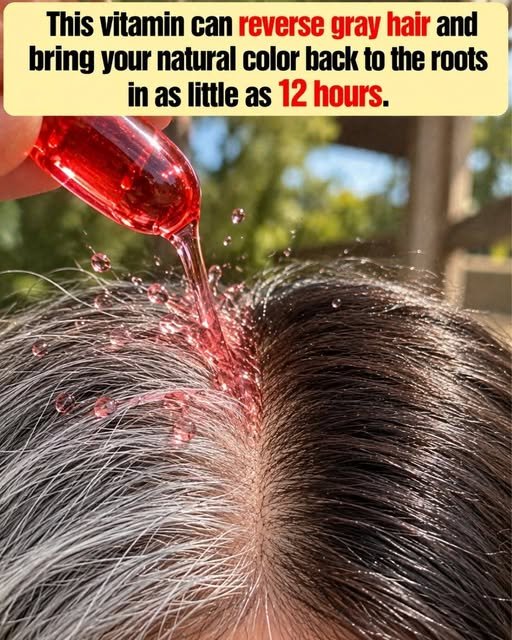
Gray hair is a normal part of aging, especially after 60. But if your hair seems to be turning gray unusually early, changing quickly, or becoming noticeably thinner at the same time, there may be more going on than genetics and age.
One nutritional factor worth knowing about is vitamin B12.
A vitamin B12 deficiency does not mean that taking B12 will automatically restore your natural hair color. However, B12 is essential for healthy red blood cells, nerve function, and DNA production, and deficiency can contribute to a range of health problems. In some cases, correcting a deficiency may help address changes associated with poor nutritional status.
Why Vitamin B12 Matters as You Get Older
Vitamin B12 helps your body:
- Produce healthy red blood cells
- Maintain normal nerve function
- Make DNA
- Support normal cellular metabolism
As people age, however, getting enough B12 can become more complicated. Some older adults absorb B12 less efficiently because stomach acid and other digestive factors can change with age.
Certain medications and medical conditions can also interfere with B12 absorption.
That’s why persistent fatigue, weakness, numbness or tingling, balance problems, or other unexplained changes may be worth discussing with a healthcare professional.
The “Trigger” to Know: B12 Deficiency
The important point is not that B12 itself is a magic gray-hair treatment.
The potential trigger is having too little B12 in the first place.
Nutritional deficiencies have sometimes been associated with premature graying, but age-related gray hair is usually influenced by genetics and the gradual reduction of pigment-producing activity in hair follicles.
If a person is deficient in B12, identifying and treating that deficiency is important for overall health regardless of whether hair color changes.
Can B12 Reverse Gray Hair?
Usually, you should not expect a B12 supplement to turn naturally gray hair back to its original color.
Gray hair develops when hair follicles produce less melanin, the pigment responsible for hair color. With normal aging, this process is generally irreversible.
However, if premature graying is related to an underlying nutritional problem or another treatable condition, addressing the cause may potentially affect the progression in some people.
That is very different from claiming that B12 can reliably reverse normal age-related gray hair.
Who May Be More Likely to Have Low B12?
Older adults may be at greater risk, particularly if they have conditions or take medications that interfere with B12 absorption.
People who eat little or no animal-derived food may also need to pay closer attention because naturally occurring B12 is found primarily in animal foods, while many plant-based foods are fortified with it.
Foods that can provide B12 include:
- Fish and seafood
- Meat and poultry
- Eggs
- Milk and dairy products
- Fortified breakfast cereals
- Fortified plant-based beverages
- Nutritional yeast products fortified with B12
A balanced diet can help, but some people require supplementation because of absorption problems rather than simply inadequate dietary intake.
Signs That You May Need to Check Your B12
Gray hair alone is not a reliable sign of B12 deficiency.
Other symptoms can be more informative, including:
- Persistent tiredness or weakness
- Pale skin
- Numbness or tingling in the hands or feet
- Problems with balance
- Memory or concentration changes
- A sore or unusually smooth tongue
- Reduced appetite in some people
These symptoms have many possible causes, so they should not be used for self-diagnosis.
A healthcare professional can determine whether blood testing for B12 and other nutritional or medical causes is appropriate.
Don’t Take High-Dose B12 Just for Your Hair
Because B12 is water-soluble, some people assume that taking large amounts is automatically harmless. That’s not a good reason to take high-dose supplements unnecessarily.
If you suspect a deficiency, discuss the appropriate form and dose with a healthcare professional, especially if you take medications or have chronic medical conditions.
And remember: more B12 does not necessarily mean healthier hair.
If your B12 level is already adequate, taking extra B12 has not been established as a reliable way to prevent normal age-related graying.
Other Factors That Affect Gray Hair
Hair color after 60 is influenced by much more than one vitamin.
Important factors include:
- Genetics and family history
- Normal aging of hair follicles
- Oxidative and cellular changes
- Certain medical conditions
- Some nutritional deficiencies
- Smoking and other lifestyle factors
Rather than focusing on one nutrient, it makes more sense to support overall health with adequate protein, a varied diet, regular physical activity, good sleep, and appropriate medical care.
When Gray Hair Deserves Medical Attention
Gray hair itself is usually harmless.
However, speak with a healthcare professional if you experience rapid or unusually early graying along with hair loss, significant fatigue, weakness, numbness, skin changes, unexplained weight loss, or other new symptoms.
A sudden change in your hair may be worth evaluating, particularly when it occurs alongside other changes in your health.
The Bottom Line
Vitamin B12 is essential for healthy blood cells, nerves, and DNA production, and deficiency can cause important health problems. While correcting a B12 deficiency may be beneficial when one exists, there is no strong evidence that B12 supplements can reliably reverse normal age-related gray hair after 60.
If you’re concerned about rapidly changing hair color or other symptoms, checking for nutritional deficiencies and discussing your overall health with a healthcare professional is a more useful approach than relying on a single “gray hair” vitamin.
Medical Disclaimer
This article is for general educational purposes only and is not a substitute for individualized medical advice, diagnosis, or treatment. If you are concerned about vitamin B12 deficiency, hair changes, or other symptoms, speak with a qualified healthcare professional before starting supplements or changing treatment.