
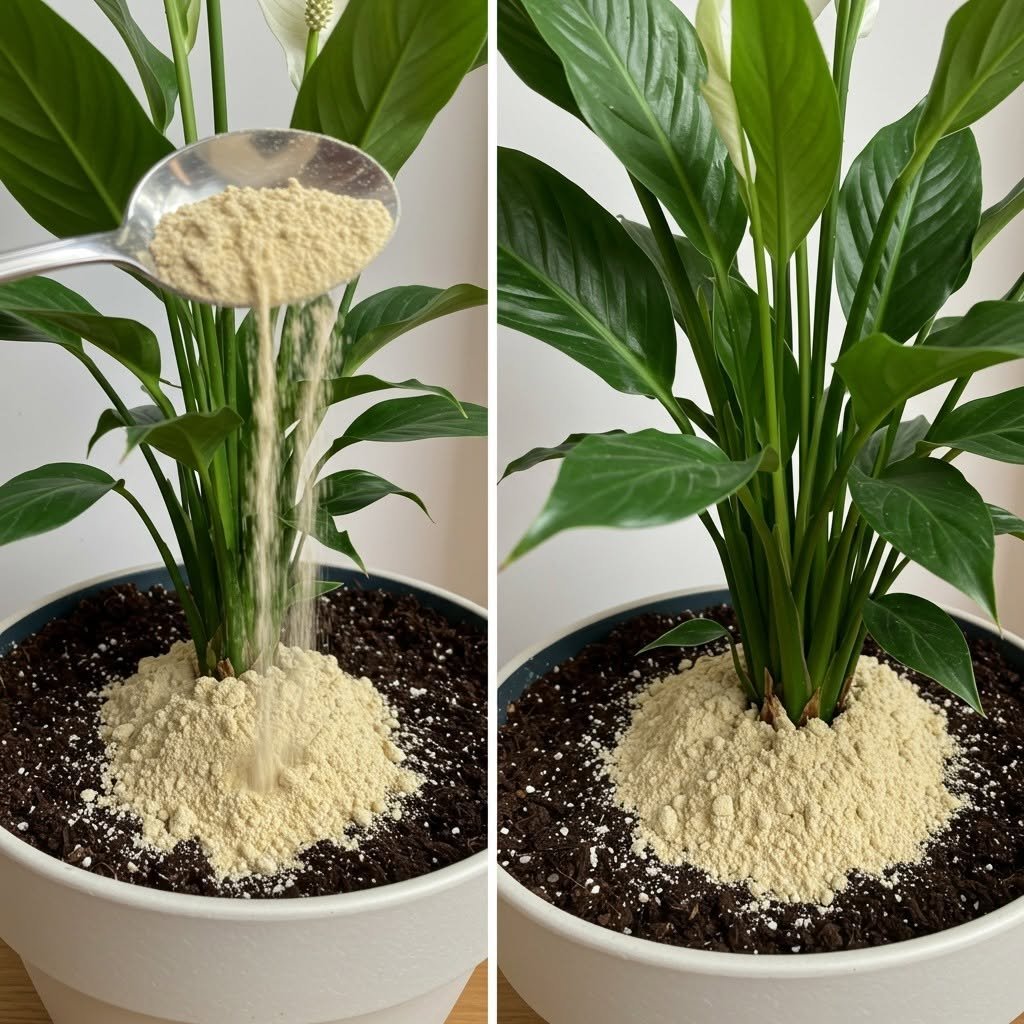
Peace lilies are popular houseplants because they can thrive indoors and produce elegant white flowers with the right care. But when a peace lily stops blooming, many plant owners look for a single “secret ingredient” that will bring the flowers back.
The truth is less mysterious—but much more useful.
There is no single ingredient that can guarantee a peace lily will bloom continuously for 10 years. However, one thing that can make a major difference is a balanced houseplant fertilizer, used correctly and combined with good light, watering, and root care.
The “One Ingredient” That Actually Matters
If your peace lily is healthy but rarely produces flowers, a complete, balanced fertilizer can help provide nutrients needed for normal growth and flowering.
Look for a fertilizer formulated for flowering houseplants that supplies the major nutrients:
- Nitrogen (N) — supports healthy leaves and stems
- Phosphorus (P) — plays an important role in root development and reproductive growth
- Potassium (K) — supports overall plant health and water regulation
More fertilizer does not mean more flowers. Using too much can cause salt buildup in the soil and damage the roots.
Always follow the product’s dilution and application instructions.
Light Is Even More Important Than Fertilizer
A peace lily can survive in relatively low light, but survival is not the same as vigorous flowering.
For better chances of blooming, place your plant somewhere with bright, indirect light.
Avoid harsh, direct afternoon sunlight, which can scorch the leaves. A location near a bright window with filtered light is often a good choice.
If your peace lily produces lots of green leaves but few or no flowers, insufficient light may be one of the first things to check.
Water It Correctly
Peace lilies like consistently moist soil, but they don’t want to sit in constantly saturated conditions.
A simple approach is to check the top layer of soil before watering. If it has begun to dry, water thoroughly until some water drains from the bottom of the pot.
Then empty excess water from the saucer.
Both extremes can cause problems:
- Too little water: wilting, dry leaf edges, and stress
- Too much water: yellowing leaves, poor root health, and possible root rot
The goal is even moisture with good drainage.
Don’t Ignore the Roots
A peace lily can struggle to flower when its roots are unhealthy or the potting mix has become compacted.
Make sure the container has drainage holes and that the growing medium drains reasonably well.
If roots are circling densely around the pot or water runs through extremely quickly without soaking the soil, it may be time to repot into a slightly larger container with fresh, well-draining potting mix.
Avoid moving a healthy plant into a dramatically oversized pot. Excess soil can remain wet for too long.
What About Household “Miracle” Ingredients?
You may see recommendations for adding things such as coffee grounds, sugar, rice water, banana peels, or other kitchen ingredients to the soil.
These aren’t necessary for healthy peace lily growth, and some can create problems when used excessively.
For predictable nutrition, a properly formulated houseplant fertilizer is a safer and more controllable choice.
Also be cautious with Epsom salt. It is sometimes promoted as a universal flowering booster, but adding magnesium when the plant does not need it can disrupt nutrient balance rather than improve flowering.
Remove Old Flowers
Once a peace lily flower has aged and begun to turn green or brown, you can remove the spent flower stalk with clean scissors.
This keeps the plant looking tidy and allows it to direct its resources toward continued growth rather than maintaining an old flower structure.
Don’t remove healthy green leaves simply because they are large. Those leaves are important for photosynthesis and help fuel future growth.
How to Encourage Long-Term Flowering
Instead of searching for one magical ingredient, focus on a simple routine:
- Provide bright, indirect light.
- Water when the soil begins to dry rather than on a rigid schedule.
- Use a balanced houseplant fertilizer according to the label.
- Make sure the pot drains properly.
- Keep the plant away from extreme temperatures and drafts.
- Remove old flowers and badly damaged leaves.
- Repot when the plant has genuinely outgrown its container or the growing medium has deteriorated.
With consistent care, a peace lily can remain a healthy houseplant for many years.
Can a Peace Lily Really Bloom for 10 Years?
A peace lily can potentially live for many years indoors, but there is no fertilizer or ingredient that guarantees uninterrupted flowering for 10 years.
Flowering naturally varies with the plant’s age, growing conditions, season, light levels, and overall health.
If your plant has stopped flowering, don’t assume it needs more fertilizer. Light is often one of the first environmental factors worth checking.
The Bottom Line
The “one ingredient” that can help a peace lily flower more reliably is not a secret kitchen remedy—it’s properly balanced plant nutrition, used as part of good overall care.
But fertilizer alone won’t create endless blooms. Give your peace lily sufficient indirect light, appropriate watering, healthy roots, and sensible feeding, and you’ll give it the best chance of producing flowers year after year.
Plant-Care Disclaimer
Plant-care advice can vary depending on the cultivar, growing conditions, potting medium, and local climate. Always follow the instructions on fertilizer products and avoid applying concentrated household ingredients to plants without understanding their effects.