
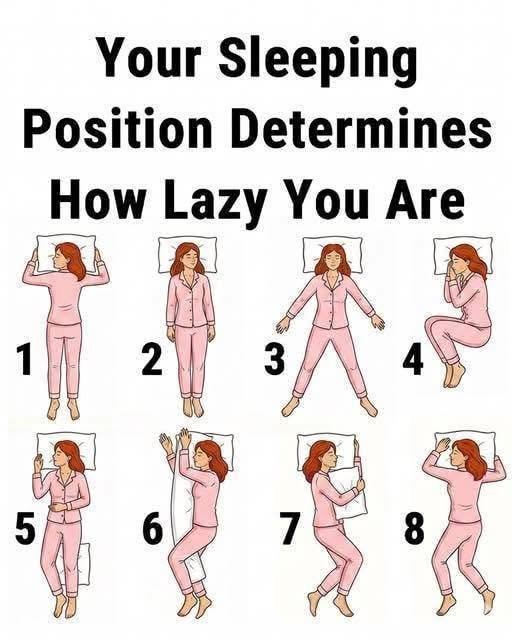
Do you sleep on your side, back, stomach—or curled up in a tight ball?
Sleep-position personality tests have been popular for years, with claims that the way you sleep can reveal whether you’re confident, sensitive, independent, anxious, or outgoing.
But there’s an important distinction:
Your sleeping position can be interesting to explore, but it cannot reliably reveal your true personality.
Sleep posture is influenced by comfort, habit, pain, temperature, mattress quality, breathing, pregnancy, and many other factors.
Still, it’s fun to see what different positions are often said to represent.
1. The Side Sleeper
You sleep mostly on your left or right side, perhaps with your arms stretched out or wrapped around a pillow.
Popular personality interpretations often describe side sleepers as:
- Thoughtful
- Adaptable
- Social but selective
- Comfortable with routine
- Practical
Of course, there is no scientific test showing that side sleeping causes these personality traits.
A practical benefit
Side sleeping can be comfortable for many people, and it may reduce snoring for some. People with certain medical conditions may also be advised to favor a particular sleeping position.
2. The Fetal Position
You curl onto your side with your knees drawn toward your chest.
This is one of the most common sleeping positions.
Personality quizzes often associate it with people who are:
- Sensitive
- Cautious
- Comfort-seeking
- Reserved at first
- Emotionally reflective
But the position may simply feel comfortable and secure.
A pillow between the knees can also make this position more comfortable by supporting the hips and spine.
3. The Back Sleeper
You sleep flat on your back with your arms at your sides or resting on your body.
This position is sometimes associated with people who are supposedly:
- Calm
- Self-confident
- Independent
- Straightforward
- Comfortable taking charge
Again, these are