
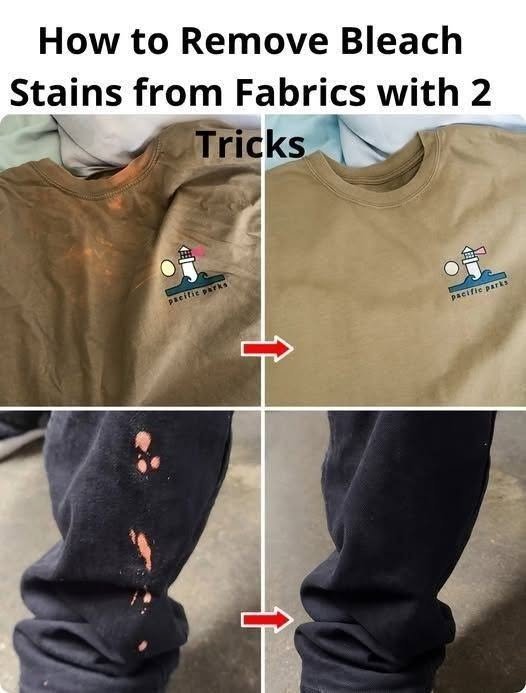
Have you ever accidentally spilled bleach on a favorite shirt, pair of pants, or sweatshirt and ended up with an orange, pink, or faded patch?
It can be frustrating because bleach doesn’t behave like an ordinary stain. Instead of simply sitting on top of the fabric, bleach removes or changes the fabric’s original dye. That means regular stain removers usually won’t make the original color come back.
The good news is that you may still be able to camouflage the damaged area or recolor the garment. Here are two practical methods worth trying.
Why Does Bleach Leave Marks on Clothes?
Bleach, particularly chlorine bleach, is a powerful oxidizing agent. When it comes into contact with colored fabric, it can break down the molecules responsible for the color.
That’s why a black garment may develop an orange or reddish spot, while a dark blue shirt may become pinkish or pale.
The mark isn’t technically a traditional stain. The original color has been removed.
For this reason, rubbing the area with another cleaning product generally won’t restore the color.
Trick 1: Use a Fabric Marker
For small bleach spots, a fabric marker can be one of the simplest solutions.
What You’ll Need
- A fabric marker close to the garment’s original color
- The affected clothing
- A clean cloth
- A piece of cardboard or paper
Step-by-Step Instructions
1. Wash and dry the garment first.
Make sure there is no remaining bleach or other cleaning product on the fabric.
2. Choose a matching color.
Try to find a fabric marker that closely matches the original shade.
3. Test it first.
Apply a small amount to an inconspicuous area to make sure the color looks appropriate.
4. Apply the marker gradually.
Lightly color the bleached area rather than covering it heavily in one pass.
5. Let it dry.
Allow the color to set according to the marker manufacturer’s instructions.
6. Add another layer if necessary.
Several light applications can look more natural than one heavy application.
This method works particularly well for small spots on dark-colored cotton clothing.
Trick 2: Re-Dye the Entire Garment
When the bleach damage is larger, recoloring the whole garment can produce a much more even result.
Instead of trying to match one small area, fabric dye can give the entire item a fresh color.
What You’ll Need
- Fabric dye suitable for your material
- Rubber gloves
- The garment
- A container or washing machine, depending on the dye
- The manufacturer’s instructions
How to Do It
1. Check the fabric label.
Different materials accept dyes differently. Cotton, linen, polyester, wool, and synthetic blends may require different products.
2. Select an appropriate dye.
Choose a product specifically designed for the fabric you’re working with.
3. Prepare the garment.
Wash it according to the dye instructions and make sure it is free of other cleaning products.
4. Dye the entire garment.
Follow the manufacturer’s recommended temperature, amount of dye, and soaking time.
5. Rinse thoroughly.
Continue rinsing as directed until excess dye is removed.
6. Wash separately.
The first few washes may release excess dye, so follow the product instructions carefully.
Why Dyeing the Whole Garment Can Be Better
Trying to dye only the bleach spot can leave a visible difference in shade. Re-dyeing the entire piece distributes the new color more evenly and can make the original bleach damage much less noticeable.
Can Baking Soda or Vinegar Remove a Bleach Stain?
You’ll often see online tips recommending baking soda, vinegar, lemon juice, or other household ingredients.
These products cannot restore color that bleach has already removed.
Once the dye has been chemically damaged, the solution is generally to replace, cover, or disguise the missing color, rather than trying to wash it away.
And there’s an important safety rule:
Never mix bleach with vinegar, ammonia, or other household cleaning products. Dangerous fumes can be produced.
What If the Bleach Spot Is Very Large?
If the affected area is too large for a marker or dye doesn’t produce the result you want, you still have options.
You could:
- Add a decorative patch.
- Cover the area with embroidery.
- Use fabric paint to create a design.
- Turn the garment into a deliberate tie-dye style.
- Recolor the entire garment.
- Repurpose the clothing for another use.
Sometimes a mistake can even become a creative design.
How to Prevent Bleach Accidents
When using bleach around clothing, prevention is much easier than repair.
Keep bleach away from colored garments whenever possible, wear old clothing while cleaning, and store bleach securely away from fabrics.
If you accidentally splash bleach on clothing, rinse the affected area thoroughly with water as soon as possible and follow the care instructions on the garment.
Final Thoughts
Bleach marks can be difficult because they aren’t ordinary stains—the bleach may have permanently removed the fabric’s original color.
For small marks, a matching fabric marker can help camouflage the discoloration. For larger areas, re-dyeing the entire garment may provide a more uniform appearance.
The key is to understand what happened to the fabric: you’re usually not removing a stain; you’re restoring or replacing lost color.