
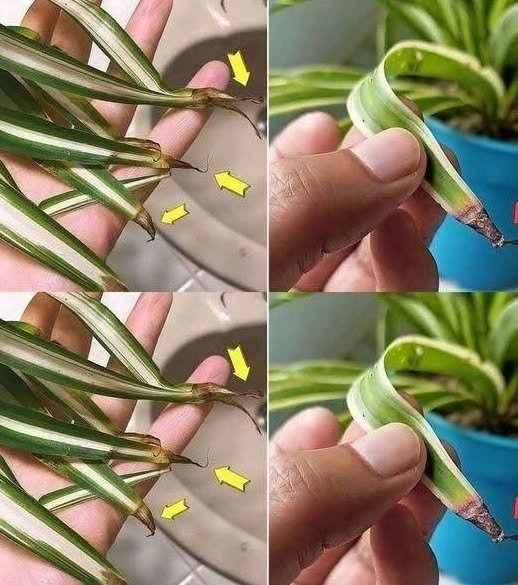
Spider plants are generally easy to care for, but there is one problem that almost every spider-plant owner eventually notices: brown, crispy tips on the leaves.
It can be frustrating when the plant otherwise looks healthy.
The good news is that brown tips are usually a sign of environmental stress rather than a serious disease. Several different factors can cause them, and understanding the cause is the best way to prevent new growth from turning brown.
1. Tap Water Can Be a Culprit
One of the most common reasons spider-plant tips turn brown is sensitivity to minerals and chemicals that can accumulate in the soil.
Depending on your local water supply, tap water may contain fluoride, chlorine, or dissolved salts. Over time, these substances can build up around the roots and contribute to brown leaf tips.
If you’ve ruled out other causes, try using:
- Filtered water
- Rainwater
- Distilled water
You don’t necessarily need to change the water source immediately. If your plant is otherwise healthy, you can experiment with filtered or rainwater and observe whether new leaves develop healthier tips.
2. Too Much Fertilizer
Fertilizer is useful for healthy growth, but more is not better.
Excess fertilizer can cause salts to accumulate in the potting mix, potentially damaging the roots and causing brown leaf edges or tips.
If you’ve been fertilizing frequently, consider reducing the frequency and always follow the dilution instructions on the product label.
Occasionally flushing the potting mix with plenty of clean water can help remove accumulated soluble salts, provided the container has good drainage.
3. The Plant May Be Too Dry
Spider plants like consistent moisture, but they don’t want to remain constantly wet.
If the soil becomes extremely dry for extended periods, the leaves can develop brown, crispy tips.
Check the soil before watering rather than following a rigid calendar.
If the upper portion of the soil feels dry and the plant is beginning to wilt, it may be time to water thoroughly.
4. Too Much Direct Sunlight
Spider plants generally prefer bright, indirect light.
A little gentle sunlight can be beneficial, but strong direct sunlight—particularly through a hot window—can scorch the leaves.
If the brown areas are accompanied by pale, bleached, or scorched-looking patches, consider moving the plant slightly farther from the window or filtering the sunlight with a sheer curtain.
5. Very Dry Indoor Air
Low humidity can contribute to brown leaf tips, particularly when indoor heating or air conditioning is running frequently.
Spider plants can tolerate average household humidity, but extremely dry conditions may make crispy tips more likely.
You can increase humidity by:
- Grouping plants together
- Using a humidifier
- Keeping the plant away from strong heating or cooling vents
A humidity tray may provide some local moisture, although it is usually less effective than a humidifier.
6. The Pot May Not Drain Properly
Brown tips don’t always mean the plant needs more water.
If the soil stays wet for a long time, the roots may become stressed or damaged.
Make sure the pot has drainage holes and that excess water can escape freely.
A plant sitting in constantly saturated soil is more vulnerable to root problems.
7. The Plant May Be Root-Bound
Spider plants can produce dense roots over time.
If the roots have completely filled the container, water may move through the soil unevenly, making it difficult to keep the plant properly hydrated.
Signs that your spider plant may need repotting include:
- Roots tightly circling the inside of the pot
- Very slow growth
- Water running rapidly through the container
- The plant drying out unusually quickly
If repotting is necessary, choose a container only moderately larger than the current one and use a well-draining potting mix.
Should You Cut Off the Brown Tips?
Yes.
Brown tissue won’t turn green again.
You can trim the damaged portions with clean scissors, following the natural shape of the leaf.
Don’t cut too deeply into healthy green tissue. Leaving a very thin brown edge is better than removing a large amount of healthy leaf.
How to Prevent Brown Tips
The easiest approach is to create stable growing conditions.
Give your spider plant:
- Bright, indirect light
- Consistent but not excessive watering
- A pot with good drainage
- Moderate household humidity
- Sensible fertilization
- Water that doesn’t cause excessive mineral buildup
Also avoid constantly moving the plant from one extreme environment to another.
What If Only the Older Leaves Have Brown Tips?
A few brown tips on older leaves aren’t necessarily a reason to panic.
Leaves naturally age, and minor cosmetic damage can accumulate over time.
What matters more is whether new leaves are developing healthy growth.
If new leaves consistently emerge with brown tips, look at watering, light, fertilizer, humidity, and water quality.
The Bottom Line
Brown tips on spider plants are usually caused by water quality, excess fertilizer, inconsistent watering, dry air, intense sunlight, or root-related stress.
Instead of treating the brown tips themselves, focus on correcting the underlying growing conditions.
Trim the damaged areas for appearance, give the plant bright indirect light, avoid overwatering, and pay attention to the quality of the water you use.
With stable care, new leaves should have a much better chance of staying green and healthy.
Plant-Care Disclaimer
Plant symptoms can have multiple causes, and the appropriate care depends on the growing environment, potting mix, water quality, and plant condition. If your spider plant is rapidly declining despite appropriate care, inspect the roots and consider consulting a local nursery or plant professional.