
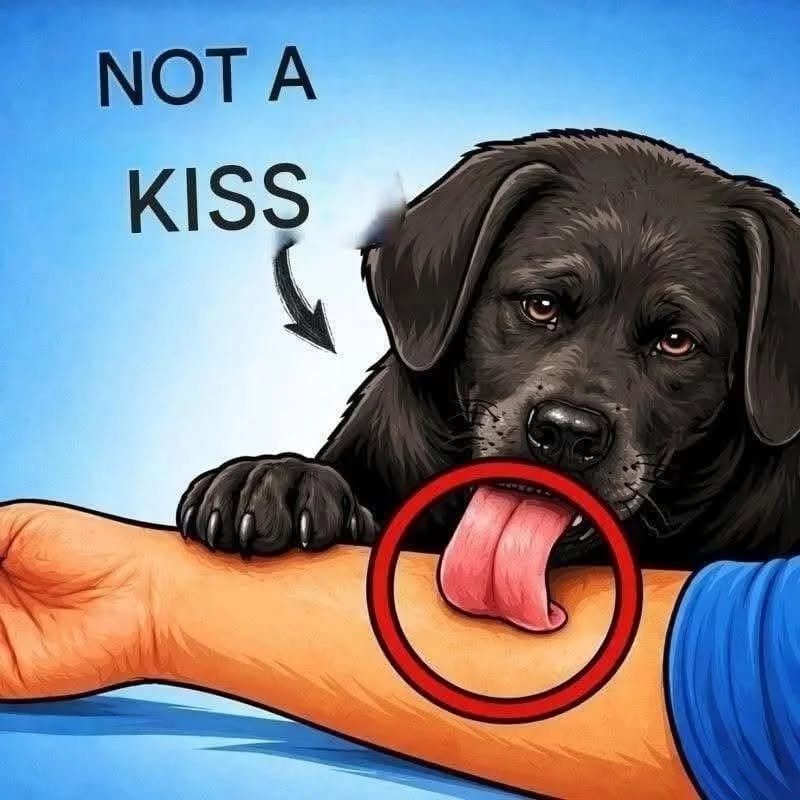
If your dog regularly licks your hands, face, feet, or even your clothes, you may wonder what they’re trying to tell you.
Is it affection? Hunger? Anxiety? Or simply a strange habit?
The answer is: it can be any of these—and sometimes none of them.
Dogs use licking as one way to interact with their environment and communicate. Understanding the situation, body language, and frequency of the behavior can give you better clues about what your dog is trying to do.
1. Your Dog May Be Showing Affection
Sometimes, licking is simply a social behavior.
Dogs may lick people they are comfortable with as part of bonding and friendly interaction. If your dog approaches you with a relaxed body, wagging tail, soft eyes, and a loose posture, licking may be part of a positive social interaction.
But don’t assume every lick automatically means “I love you.”
Context matters.
2. Your Skin Tastes Interesting
Human skin contains salt from sweat and natural oils.
For some dogs, licking your skin may simply be rewarding because it tastes or smells interesting.
This is particularly common after exercise or on warm days when you may be sweating more than usual.
3. Your Dog Wants Your Attention
Dogs quickly learn which behaviors make humans react.
If licking reliably gets you to talk, pet, laugh, or look at your dog, your pet may repeat the behavior because it works.
In other words, sometimes your dog is simply saying:
“Pay attention to me.”
4. Licking Can Be a Greeting
Some dogs lick people when they arrive home or approach them after a period of separation.
This can be part of their normal social greeting behavior.
You may also notice excitement signals such as a wagging tail, wiggly body, jumping, or bringing you a toy.
5. Your Dog May Be Trying to Communicate
Licking can occur alongside other behaviors when a dog is seeking something.
Your dog might lick you while:
- Asking for food
- Wanting to go outside
- Requesting play
- Seeking petting
- Trying to get your attention
Watch what happens immediately afterward. Patterns often reveal what the dog has learned to communicate.
6. Sometimes Licking Is Related to Anxiety
Not every licking behavior is positive.
Some dogs lick themselves, people, objects, or surfaces excessively when they are anxious, frustrated, or overstimulated.
If licking is accompanied by signs such as:
- Pacing
- Trembling
- Hiding
- Whining
- Panting when not hot
- Avoiding people
- Repetitive behaviors
stress or anxiety may be involved.
A veterinarian or qualified behavior professional can help determine the cause.
7. Excessive Licking Can Sometimes Signal a Health Problem
If your dog suddenly starts licking much more than usual, don’t automatically assume it’s a behavioral quirk.
Repeated licking can sometimes occur with nausea, pain, allergies, skin irritation, dental problems, or other medical conditions.
For example, a dog constantly licking its paws may have an irritation or allergy rather than simply enjoying the habit.
A sudden or persistent change in behavior deserves attention.
8. Why Do Dogs Lick Faces?
Dogs may lick faces because faces are socially important to them and because the behavior can attract a strong human response.
Some dogs also seem particularly interested in areas around the mouth because of food smells.
However, face licking isn’t something you have to tolerate if you don’t enjoy it.
You can calmly redirect your dog to another behavior, such as sitting or offering a toy.
9. Is It Safe to Let a Dog Lick You?
For most healthy adults, an occasional lick on intact skin is unlikely to cause a problem.
However, dogs’ mouths contain many microorganisms, and saliva shouldn’t be considered sterile.
It’s best to avoid allowing dogs to lick:
- Open wounds
- Fresh surgical incisions
- Eyes
- Mouth
- Other mucous membranes
People with weakened immune systems may also need to take extra precautions and should follow their healthcare professional’s advice.
Always wash your hands after handling pets, particularly before eating or preparing food.
10. What If Your Dog Licks You Constantly?
Constant licking is different from occasional social licking.
If the behavior is new, intense, difficult to interrupt, or accompanied by other changes, consider whether there may be an underlying medical or behavioral reason.
Start by observing:
- When the licking occurs
- What happens immediately beforehand
- Whether your dog seems anxious or excited
- Whether the behavior is focused on you, itself, or objects
- Whether there are other symptoms
That information can be useful when speaking with a veterinarian.
The Bottom Line
When your dog licks you, it doesn’t have just one universal meaning.
It may be affection, social interaction, attention-seeking, curiosity, a response to the taste of your skin, or a sign of stress or another problem.
The best way to understand the behavior is to look at the entire situation and your dog’s body language.
And if licking suddenly becomes excessive or comes with other unusual symptoms, don’t ignore the change—your dog may be communicating that something isn’t quite right.
Pet Health Disclaimer
This article is for general educational purposes and is not a substitute for veterinary advice. If your dog develops sudden or persistent behavioral changes, excessive licking, pain, vomiting, appetite changes, or other concerning symptoms, consult a veterinarian.