
Sleeping position can affect comfort, breathing, digestion, and the way pressure is distributed across your body. Because of this, you may have heard claims that sleeping on your right side is harmful or that you should always sleep on your left.
The reality is more nuanced.
For most healthy adults, sleeping on the right side is not dangerous. In fact, side sleeping can be comfortable and may offer benefits for some people.
However, certain health conditions can make one sleeping position more comfortable—or less comfortable—than another.
Here is what you should know before worrying about sleeping on your right side.
Is Sleeping on Your Right Side Bad for You?
For most people, no.
There is no good evidence that simply sleeping on your right side causes serious health problems in otherwise healthy adults.
Your sleeping position is largely a matter of comfort, anatomy, and individual health circumstances.
That said, some people may notice more symptoms when lying on their right side, particularly if they have conditions involving the digestive system, heart, breathing, or musculoskeletal system.
1. It May Worsen Acid Reflux in Some People
One of the better-established reasons to consider sleeping position is gastroesophageal reflux disease (GERD).
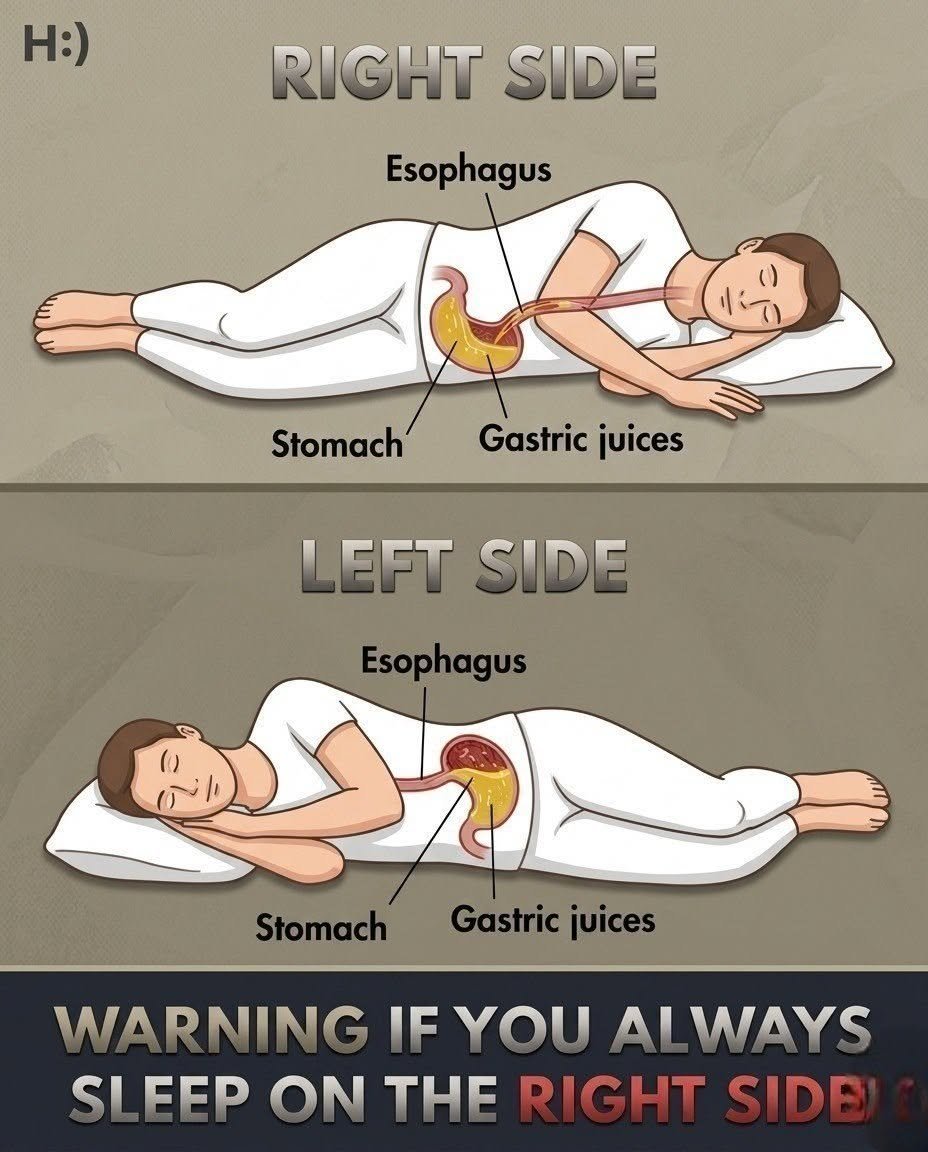
When you lie down, stomach contents can more easily move upward into the esophagus. For people with nighttime reflux, sleeping on the right side may make symptoms worse.
Symptoms can include:
- Heartburn
- Sour or bitter fluid coming into the mouth
- Regurgitation
- Chest or upper-abdominal discomfort
- Coughing at night
- A sensation of a lump in the throat
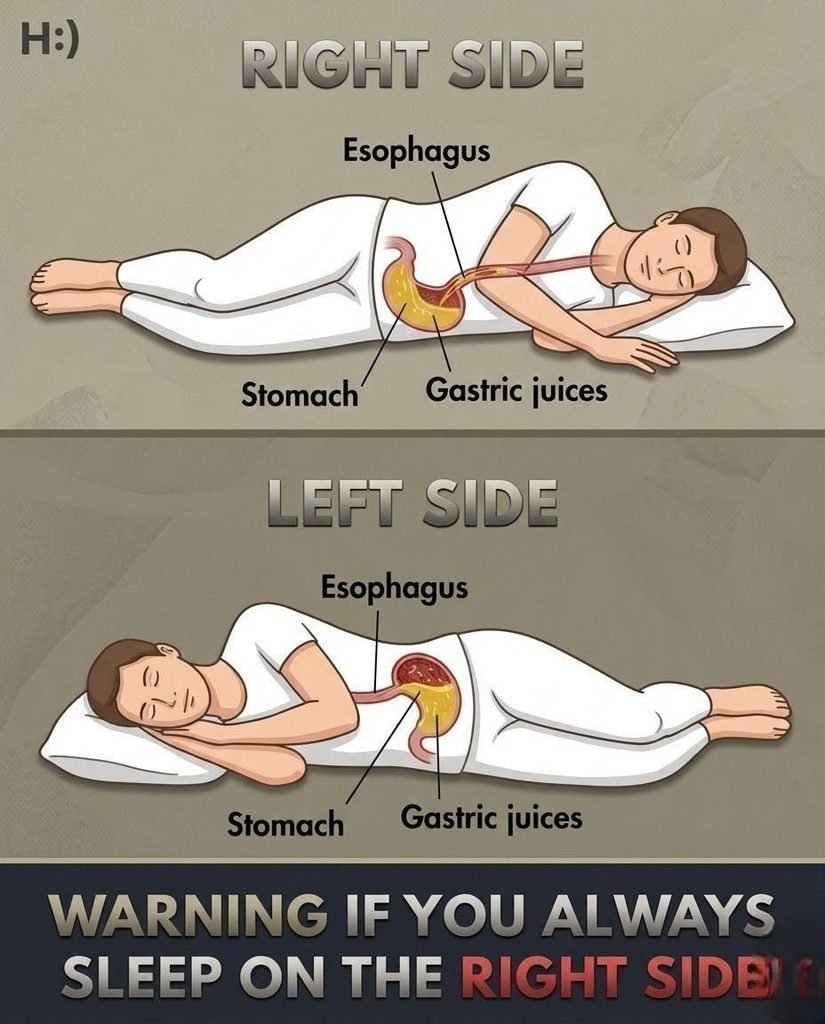
Research has found that left-side sleeping can reduce nighttime acid exposure compared with right-side sleeping in people with reflux.
If you regularly experience nighttime heartburn, your sleeping position may be worth discussing with your healthcare professional.
2. It Can Feel Uncomfortable for Some People With Heart Conditions
You may have heard that sleeping on the right side is dangerous for the heart.
For most healthy people, this is not supported by evidence.
However, people with certain cardiovascular conditions may find particular sleeping positions more comfortable than others.
Some people with heart failure, for example, experience difficulty breathing when lying flat and may need to sleep with their upper body elevated.
The important point is that new or worsening breathing difficulty while lying down should not simply be blamed on sleeping position. It can be a symptom of an underlying heart or lung problem and deserves medical evaluation.
3. Shoulder and Arm Pressure
Side sleeping naturally places pressure on the shoulder that is underneath your body.
If you sleep on the same side every night, you may experience:
- Shoulder discomfort
- Arm numbness or tingling
- Neck stiffness
- Pressure around the hip
- Muscle soreness
This does not mean side sleeping is harmful. Often, adjusting your pillow height, mattress support, or sleeping position can reduce pressure.
If you regularly wake with numbness or significant pain, consider discussing it with a healthcare professional.
4. Neck and Spine Alignment Can Be Affected
The problem may not be the right side itself—it may be how your body is positioned while sleeping.
A pillow that is too high or too low can push your neck into an uncomfortable angle.
Over time, poor alignment may contribute to morning neck or upper-back discomfort.
A pillow that keeps your head and neck relatively aligned with the rest of your spine can make side sleeping more comfortable.
Some people also benefit from placing a pillow between their knees to reduce twisting through the hips and lower back.
5. Pregnancy Can Change Which Position Is Most Comfortable
Pregnancy is a special situation.
As pregnancy progresses, many people find side sleeping more comfortable than sleeping flat on their back.
Although the left side is sometimes recommended because of circulation considerations, evidence does not mean that briefly sleeping on the right side is automatically dangerous.
Pregnant people should follow the individualized advice of their obstetrician or midwife, particularly if they have complications or have been given specific positioning instructions.
Comfort and the ability to sleep adequately are also important.
What Are the Benefits of Sleeping on Your Side?
Side sleeping isn’t simply about avoiding risks.
For many people, it can have advantages.
It May Help Reduce Snoring
Sleeping on your side rather than your back can help keep the upper airway more open in some people.
This may reduce snoring and can be particularly relevant for people who experience sleep-disordered breathing.
However, persistent loud snoring, pauses in breathing, gasping, or significant daytime sleepiness can be signs of obstructive sleep apnea and should be evaluated.
It Can Be Comfortable for Many People
Some people naturally sleep better on their side because it feels comfortable and allows them to breathe easily.
There is no universal sleeping position that is best for every person.
Right Side vs. Left Side: Which Is Better?
The answer depends on the individual.
| Situation | Position that may be more comfortable |
|---|---|
| Nighttime acid reflux | Left side may be preferable |
| Snoring | Side sleeping may help |
| Pregnancy | Side sleeping is commonly recommended; follow your clinician’s advice |
| Shoulder pain | Avoid putting pressure on the painful shoulder |
| Neck pain | Focus on proper pillow and spinal alignment |
| Heart or lung disease | Follow individualized medical advice |
These are general considerations, not rules that apply to everyone.
How to Make Right-Side Sleeping More Comfortable
If you prefer sleeping on your right side, there is usually no reason to change simply because of online claims that it is dangerous.
Instead, focus on good positioning.
Choose an appropriate pillow
Your pillow should support your head and neck without pushing your head excessively upward or allowing it to drop toward the mattress.
Consider a pillow between your knees
Placing a pillow between your knees can help keep your hips more comfortably aligned and may reduce strain on the lower back.
Avoid sleeping directly on a painful shoulder
If one shoulder is painful, sleeping on the opposite side may reduce pressure.
Keep your spine comfortable
Try to avoid positions where your neck or torso remains strongly twisted for long periods.
When Should You Talk to a Doctor?
Your sleeping position is worth discussing with a healthcare professional if you regularly experience:
- Chest pain at night
- Significant shortness of breath when lying down
- Frequent nighttime choking or gasping
- Severe or persistent heartburn
- Repeated numbness or weakness
- Significant shoulder, neck, or back pain
- Loud snoring accompanied by breathing pauses
- Frequent nighttime awakenings with unexplained symptoms
These symptoms may have causes unrelated to your sleeping position.
Seek Emergency Care for Serious Symptoms
Do not assume that chest pain or severe breathing difficulty is simply caused by sleeping on the wrong side.
Seek emergency medical attention for symptoms such as severe or sudden chest pain, severe difficulty breathing, fainting, or sudden weakness or numbness.
The Bottom Line
For most healthy people, sleeping on the right side is not dangerous.
However, right-side sleeping may worsen nighttime reflux in some people, and side sleeping in general can cause pressure-related discomfort if your pillow, mattress, or body position is not appropriate.
Rather than worrying about a single “correct” sleeping position, pay attention to how your body responds.
If you sleep comfortably, wake feeling rested, and do not have concerning symptoms, there is usually no reason to fear sleeping on your right side.
If a particular position consistently causes heartburn, pain, breathing problems, or other symptoms, talk with a healthcare professional to determine whether an underlying condition needs attention.
Medical Disclaimer
This article is intended for general educational purposes and does not replace professional medical advice, diagnosis, or treatment. People with heart disease, lung disease, pregnancy-related complications, severe reflux, sleep apnea, or persistent nighttime symptoms should discuss their individual circumstances with a qualified healthcare professional.